

QCAP presents GUiM findings at the European Congress of Qualitative Inquiry
Dr Emma Loudon attended the 9th annual European Congress of Qualitative Inquiry (ECQI), held this year in Athens between the 12th and 16th of January to present findings from the Growing up in the Market study (GUIM).
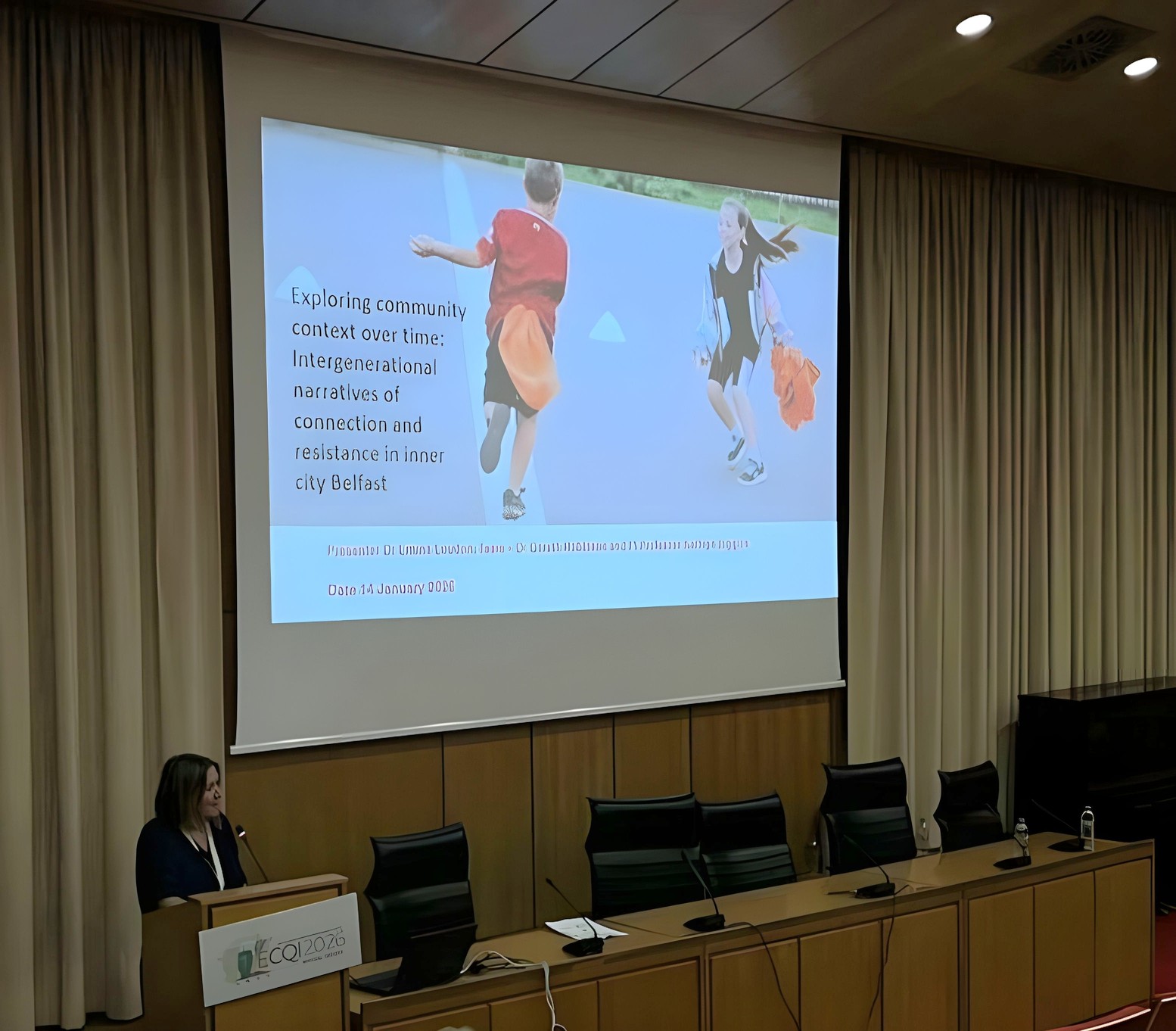
This internationally recognised conference brings together leading scholars working across qualitative, participatory, and engaged research traditions. The congress is widely regarded as a key forum for advancing methodological and ethical debates in qualitative inquiry, making it an important space to share work grounded in community-based and longitudinal research.
GUIM, is the qualitative longitudinal study developed through the research partnership between QCAP and the Market community. Presenting this work at ECQI offered an opportunity to situate the study within wider international conversations about community, inequality, and the value of research that centres lived experience over time.
The presentation emphasised the study’s intergenerational and longitudinal design and reflected on what can be learned when research relationships are sustained across multiple years. GUIM follows participants from four generational cohorts, allowing insights to emerge gradually and offering a lens on how community contexts shape lives across the life course. This approach resonated strongly with conference delegates, many of whom are engaged in similarly relational and reflexive forms of inquiry.
A key element of the discussion centred on research process: the role of trust, the ethical complexities of repeated engagement, and the ways in which boundaries between researcher and participant can shift over time. Questions from the audience reflected a shared concern with how qualitative researchers navigate responsibility, reciprocity, and care when working closely with communities, particularly those experiencing long-standing structural disadvantage.
The congress also provided a valuable space for exchange with researchers from diverse disciplinary and geographical backgrounds. Across panels and discussions, there was a clear commitment to qualitative research as a means of challenging simplified or deficit-based accounts of communities and of foregrounding complexity, agency, and collective experience. These themes aligned closely with the ethos underpinning Growing Up in the Market and the wider partnership on which the study is built.
Presenting at ECQI reinforced the importance of creating spaces where community-engaged research is taken seriously as rigorous, impactful scholarship. For Dr Loudon, the conference offered an opportunity not only to share work in progress, but also to reflect on the responsibilities that accompany longitudinal, partnership-based research. It served as a reminder that how research is conducted, and how voices are represented, matters as much as the findings themselves.