

i3o visit to Belfast
This QCAPTURES documents an I30 visit that hosted a group of international researchers and civil servants to examine Belfast’s innovation ecosystem.
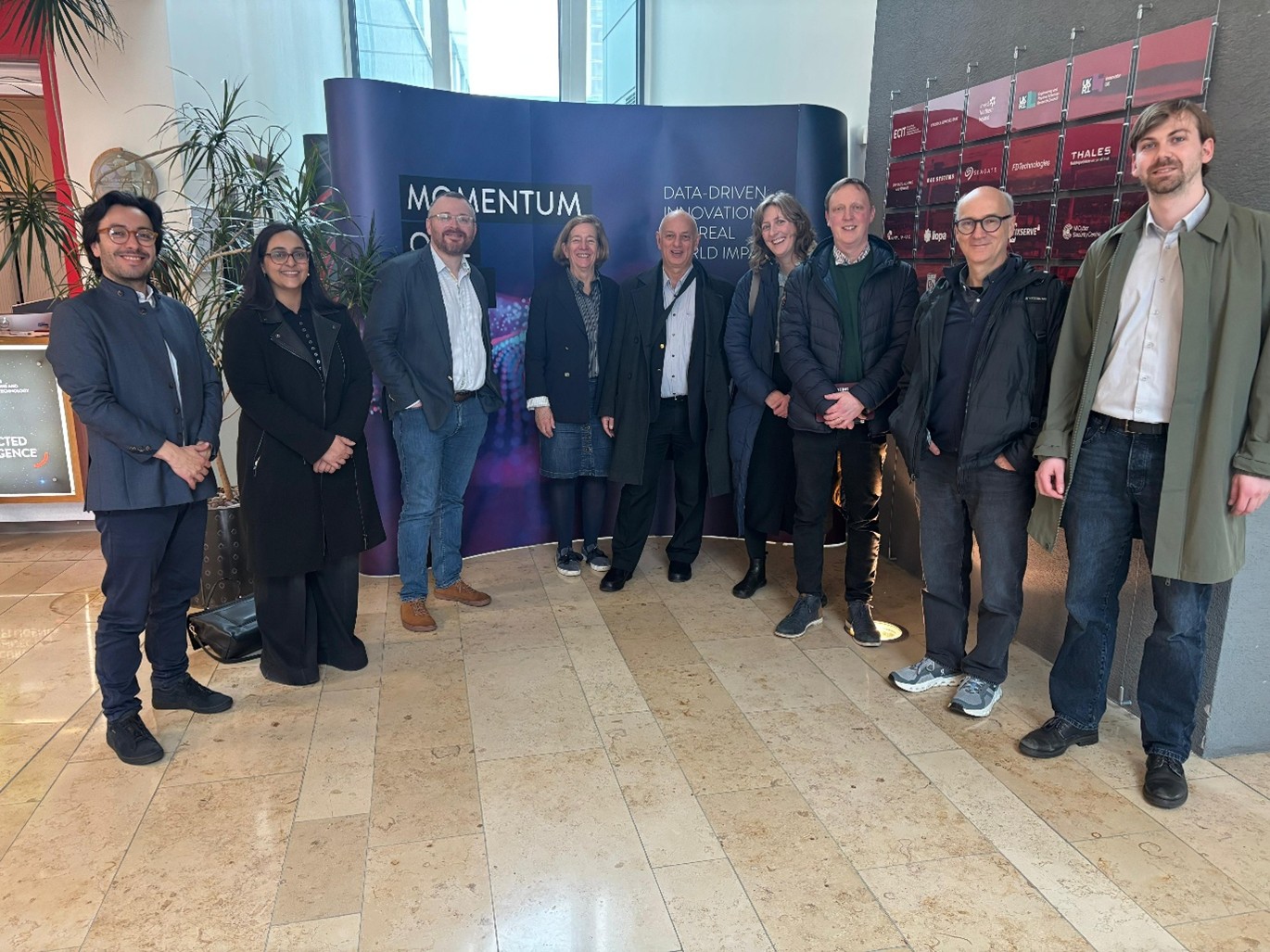
QCAP had the pleasure of hosting colleagues from Medellín (Colombia), Pittsburgh (U.S.), and Newcastle (U.K.) in Belfast, February 2026, as part of the Improving Inclusive Innovation Outcomes (i3o) programme. Throughout this week-long learning and impact visit, the group met a number of key stakeholders and innovation actors involved in the ongoing urban regeneration of Belfast and explored themes of inclusive Growth, innovation investments, and community engagement.
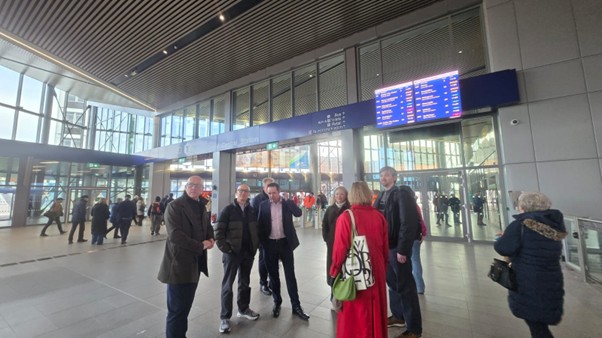
Fig. 1. Meeting with Translink at Weaver’s Cross
Monday kicked off with a visit to the city’s new transport hub, Grand Central Station, and the wider Weaver’s Cross development. The group met with representatives from Translink who showed them around the new site. They talked about the broader impact of the development on Belfast’s city centre and how the transport hub could also become a broader innovation hub. The proximity of the station to possible biotech labs, hospitals, and life sciences facilities would allow commuters to easily reach work in the city centre. They also discussed their attempted social impact in the area: including what they had achieved and the challenges they still faced. In the afternoon, the group met Garnet Busby from Belfast South in Sandy Row (a community adjacent to Weaver’s cross). This provided an interesting counterpoint to the morning’s discussion as the group heard the views on the development from this community’s perspective. By the end of, all involved with i3o had a better idea of the competing visions of what Belfast’s city centre should look like. Future-focused visions of innovation and change can sometimes sit uneasily with the visions that local communities have for themselves, particularly in challenging contexts of affordable housing shortages and places where their existence can feel under threat from over development.
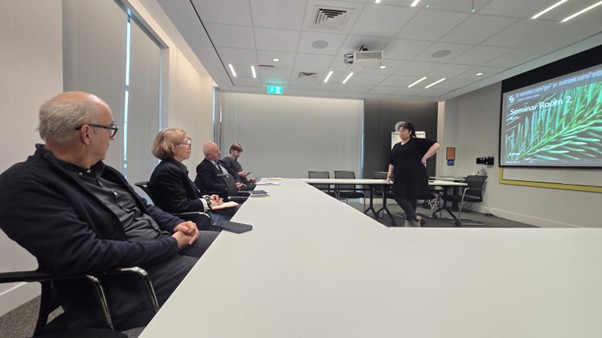
Fig. 2. Meeting with Catalyst.
On Tuesday, the group headed down to the Titanic quarter – an area of the city with a high concentration of innovation actors. They met with Catalyst who explained their role in Belfast’s broader innovation ecosystem. They talked through some of their successful programmes which focused on making entrepreneurial innovation accessible to those normally excluded from it. Representatives from Catalyst then took the group on a tour of the area where they had the opportunity to see where the Titanic was built. The site associated with this brief symbol of Belfast’s industrial zenith was a fitting location to discuss Belfast’s very different economic landscape of the 2020s. In the afternoon, the group met with one of QUB’s Belfast Region City Deal funded innovation centres, Momentum 1.0 where they learnt about AI and how businesses can be connected up with high-tech innovation in Belfast. That evening, the group attended a presentation by Innovation City Belfast in Belfast City Hall where Gorka Espiau (Agirre Lehendakaria Center) shared a vision for how innovative methods of social listening and AI could be used to improve government policy.
Fig. 3. Meeting with Momentum One Zero
Midway through the week, the group met with representatives from Ulster University who talked them through their work at Studio Ulster. This was a different side of the innovation in which the creative and tech sectors mutually enhanced one another. Studio Ulster talked through the strategy behind how they had managed to attract global talent: specialise in one small area and pour resources into it rather than spreading yourself too thinly. Studio ulster have become world leaders in virtual production, challenging narratives about Belfast as peripheral to global expertise and innovation. Later that afternoon, the group met with the innovation policy team from the Department for Economy. They talked through preparing businesses to be “innovation ready”, aiming for exponential rather than linear growth, and developments in NI’s broader innovation/economic landscape over the last thirty years.
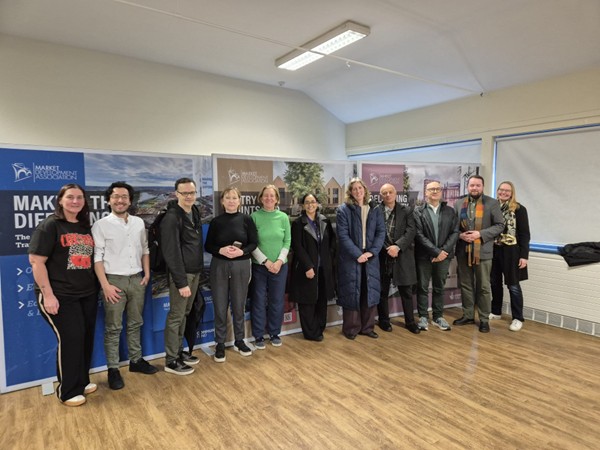
Fig. 4. Meeting with the Market Development Association.
Thursday was themed around communities. In the morning, the group visited the Market Development Association and went on a tour of the area. Fionntán Hargey talked through the deep history of the area and how this intertwined with more modern issues that the MDA has been successfully tackling through their work. In the afternoon, the group visited the Shankill where Billy Drummond talked about the history of the area, the complexity of the conflict, and the work that was being done to change narratives of the area. The group visited Impact Training which provides vocational training and employability programmes to tackle unemployment. They then visited Argyle Business Park which houses community enterprises in order to promote the social economy. We also had the opportunity to speak with Andy Allen MBE MLA, the Ulster Unionist Party’s Communities spokesperson. He had been meeting with Argyle separately regarding charitable work unrelated to the i3o visit but agreed to join our session and respond to a wide-ranging discussion on the community sector, political structures, and the wider context of the city and his role. He engaged with the group for over an hour, and we appreciated the insights he shared.
The final day of the i3o visit focused on the civic role of the university as a convenor and broker of inclusive innovation in Belfast. The group met QUB’s civic engagement team, where we learned about the evolution and ambitions the institution has as a place-based anchor, civic partner, and University of Sanctuary. Afterwards, i3o held a research seminar in Queen’s Communities and Place which provided an opportunity to reflect on the week. The group drew comparisons with their home contexts, discussed lessons learned, and made recommendations for future action. Many of the group praised Belfast’s innovation ecosystem and hoped that it would provide a vehicle to further enhance connection in an environment which they saw as still very divided.
We look forward to furthering our work with i3o when we visit our partners in Pittsburgh in the coming weeks!